


Imagine navigating the world with confidence, managing your home, your schedule, and your personal care with ease. For many, these tasks are second nature. For others, they can be significant sources of stress and anxiety. This is where the profound impact of Daily Living Skills Training comes into play. Also known as Activities of Daily Living (ADLs) and Instrumental Activities of Daily Living (IADLs), these are the fundamental skills required to live independently and thrive in a community. Ultimately, Daily Living Skills Training is a specialized, practical form of coaching that empowers individuals to take control of their lives, one skill at a time.
This training is not just about learning to cook or clean; it is about building self-esteem, fostering autonomy, and enhancing overall quality of life. Whether for a young adult transitioning out of foster care, an individual recovering from an injury, or a person with developmental or cognitive disabilities, this training provides the essential toolkit for successful, self-reliant living.
What Exactly Are Daily Living Skills?
To fully appreciate the value of this training, it’s helpful to understand the categories of skills it encompasses. These skills are typically divided into two main groups: Basic Activities of Daily Living (ADLs) and Instrumental Activities of Daily Living (IADLs).
Basic ADLs are the self-care tasks we learn early in life. They include:
-
Personal hygiene and grooming (bathing, oral care, hair care)
-
Dressing (selecting appropriate clothing and putting it on)
-
Feeding oneself (managing utensils and eating independently)
-
Mobility (transferring from bed to chair, walking)
-
Toileting (maintaining continence and using the toilet)
On the other hand, IADLs are more complex skills that are essential for living independently within a community. This is where much of the focused Daily Living Skills Training occurs. These skills include:
-
Meal Preparation: Planning nutritious meals, grocery shopping, and safe cooking.
-
Money Management: Budgeting, paying bills, and using a bank account.
-
Transportation: Navigating public transit, driving, or using ride-sharing services.
-
Housekeeping: Cleaning, laundry, and general home maintenance.
-
Communication: Using the phone, email, and other forms of technology.
Who Can Benefit from This Essential Training?
The beautiful thing about Daily Living Skills Training is its universal applicability. It is a powerful intervention for a diverse range of individuals who are working towards greater self-sufficiency.
Young Adults: Teens and young adults, especially those transitioning out of the foster care system or those with learning differences, may lack the foundational knowledge to live on their own. Training provides them with a critical head start.
Individuals with Developmental Disabilities: For people with conditions such as Autism Spectrum Disorder (ASD) or intellectual disabilities, these skills may not be learned intuitively. Structured, repetitive, and personalized Daily Living Skills Training can break down complex tasks into manageable steps, leading to monumental gains in independence.
People Recovering from Injury or Illness: A stroke, traumatic brain injury, or major surgery can rob a person of abilities they once took for granted. Rehabilitation-focused Daily Living Skills Training is central to occupational therapy, helping individuals relearn how to care for themselves and regain their autonomy.
Older Adults: As people age, physical and cognitive changes can make daily tasks challenging. Proactive training can help seniors adapt their techniques and use assistive devices to maintain their independence safely at home for as long as possible.
The Core Components of an Effective Training Program
A high-quality Daily Living Skills Training program is never a one-size-fits-all lecture. It is a hands-on, client-centered, and goal-oriented process. Several key components ensure its effectiveness.
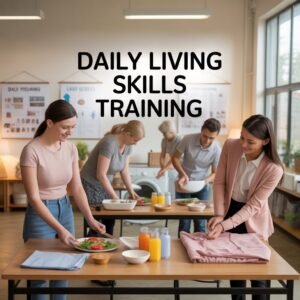
First, a comprehensive assessment is conducted to identify the individual’s current abilities, challenges, and personal goals. Consequently, a customized plan is developed, targeting specific skills. The training itself is highly practical. For instance, learning money management happens by creating a real budget, and meal preparation is taught in a kitchen environment.
Furthermore, skills are broken down into small, sequential steps using task analysis. This method makes even a complex task like doing laundry less overwhelming. Positive reinforcement and encouragement are used consistently to build confidence and motivation. Finally, the training focuses on generalization—practicing skills in different environments to ensure the individual can perform them at home, in the community, and at work.
The Ripple Effect: Benefits Beyond Basic Tasks
The advantages of mastering daily living skills extend far beyond the ability to cook a meal or wash clothes. The ripple effect touches every aspect of a person’s life, creating a positive feedback loop of confidence and capability.
Enhanced Self-Esteem and Dignity: There is an immense sense of pride that comes from being able to care for oneself. Successfully managing one’s own life is a powerful boost to self-worth and reduces feelings of helplessness.
Greater Social and Community Integration: When individuals can manage public transportation, handle money for purchases, and maintain personal hygiene, they are better equipped to participate in social activities, pursue education, and secure employment. This reduces isolation and fosters a sense of belonging.
Reduced Burden on Caregivers: While caregivers play a vital role, fostering independence benefits everyone. As individuals become more self-sufficient, the constant demand on family members or support staff is lessened, improving relationships and reducing caregiver burnout.
Increased Safety: Proper training in areas like medication management, stove safety, and emergency procedures ensures that individuals can live more safely and respond appropriately to potential hazards.
In conclusion, Daily Living Skills Training is much more than a checklist of chores. It is a transformative journey towards personal freedom. By investing in this practical education, we are not just teaching tasks; we are unlocking potential, building confidence, and paving the way for a more independent, fulfilling, and dignified life for countless individuals.
Frequently Asked Questions (FAQs)
1. Who typically provides Daily Living Skills Training?
This training is often provided by occupational therapists, certified life skills coaches, behavioral therapists, and support staff within community-based agencies, schools, and rehabilitation centers.
2. How long does it take to see progress?
Progress is highly individualized. Some skills may be learned quickly, while others require consistent practice over weeks or months. The focus is on gradual, sustainable improvement rather than speed.
3. Can this training be conducted at home?
Yes, in fact, training in the person’s actual living environment is highly effective. It ensures that skills are learned and practiced in the context where they will be used, which promotes better retention and generalization.
4. What is the difference between ADLs and IADLs?
ADLs (Activities of Daily Living) are basic self-care tasks like bathing and dressing. IADLs (Instrumental Activities of Daily Living) are more complex skills needed for independent community living, such as managing finances and transportation.
5. Is this training only for people with disabilities?
Not at all. While crucial for many with disabilities, anyone who lacks certain life skills can benefit, including young adults launching into independence or older adults adapting to new life circumstances.