

From the moment a child squeezes a parent’s finger to the day they confidently tie their shoelaces, fine motor skills are a silent, constant thread in the tapestry of human development. These small, precise movements of the hands and fingers are fundamental to independence, learning, and self-esteem. For some children, however, these skills do not develop as naturally, making targeted support essential. This is where the profound value of structured Fine Motor Skills Sessions becomes clear. These specialized sessions are not merely about play; they are a strategic and therapeutic approach to helping children master the intricate hand movements needed for everyday life. Consequently, engaging in dedicated Fine Motor Skills Sessions can unlock a child’s potential, fostering confidence and paving the way for academic and personal success.
What Are Fine Motor Skills and Why Are They Crucial?
Fine motor skills involve the coordinated use of the small muscles in the hands, wrists, and fingers, synchronized with the eyes. This coordination is vital for a vast range of activities that children encounter daily. For instance, essential tasks like holding a pencil, using scissors, buttoning a shirt, and manipulating zippers all rely on proficient fine motor control. Furthermore, these skills are directly linked to academic readiness. A child’s ability to write legibly, draw, and handle classroom materials directly impacts their learning experience and self-perception. When these skills are underdeveloped, a child may experience frustration, avoidance of certain tasks, and a dip in confidence. Therefore, early identification and intervention through professional Fine Motor Skills Sessions can make a monumental difference.
Key Components of Effective Fine Motor Skills Sessions
A high-quality program is far more than a collection of activities; it is a carefully structured therapeutic process. Effective Fine Motor Skills Sessions are built on several core components that ensure progress and engagement.
1. Individualized Assessment and Goal Setting
Firstly, every child’s journey is unique. A comprehensive assessment is always the starting point for any effective program. This evaluation identifies specific strengths and challenges, such as hand strength, pincer grasp, in-hand manipulation, or bilateral coordination. Based on this assessment, clear and achievable goals are established. For example, a goal might be for a child to independently fasten their pants or correctly hold a crayon using a tripod grasp. This personalized roadmap ensures that every activity within the Fine Motor Skills Sessions has a defined purpose.
2. A Play-Based and Engaging Approach
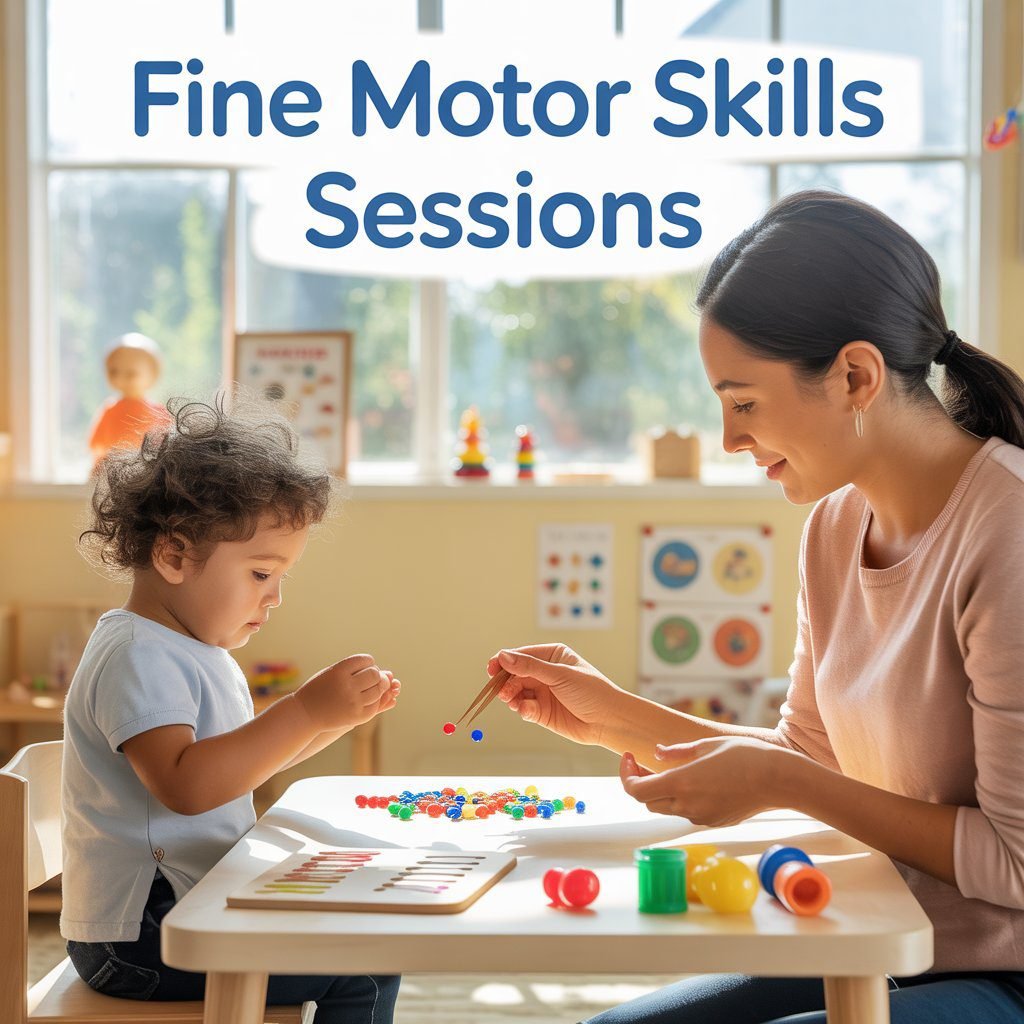
Therapy for children must be engaging to be effective. Consequently, the best sessions are disguised as play. Therapists use a variety of fun and motivating materials to target specific skill areas. A child might be strengthening their hand arches by playing with therapeutic putty, improving their pincer grasp by placing small pegs into a board, or developing bilateral coordination by stringing beads. This play-based approach keeps children motivated, reduces anxiety, and transforms hard work into an enjoyable experience, ensuring consistent participation and effort.
3. Strengthening and Dexterity Activities
A strong foundation is necessary for precise movements. Many activities within Fine Motor Skills Sessions are designed to build the intrinsic hand muscles. This can be achieved through tasks such as squeezing spray bottles, using tweezers to sort small objects, or manipulating clothes pegs. Once strength is improved, the focus can shift to dexterity—the ability to perform skilled, controlled movements. Activities like assembling Lego bricks, turning individual pages in a book, or playing with puzzles are excellent for refining dexterity and coordination.

Common Activities in Fine Motor Skills Sessions
The toolkit for developing these skills is diverse and creative. Here are some typical activities that might be incorporated:
-
Scissor Skills: Cutting along straight, curved, and zig-zagged lines is a complex skill that requires hand strength, coordination, and visual-motor integration.
-
Pre-Writing Strokes: Before forming letters, children practice vertical, horizontal, and circular strokes through fun activities like drawing in sand or shaving cream.
-
Lacing and Threading: Using lacing cards or threading beads onto a string is superb for promoting a pincer grasp and hand-eye coordination.
-
Small Object Manipulation: Playing with games that involve picking up small pieces, like Connect Four or Jenga, encourages a refined pincer grasp.
-
Sticker Play: Peeling stickers off a sheet and placing them precisely on paper is a fantastic and motivating way to develop tip-to-tip finger control.
Who Can Benefit from Fine Motor Skills Sessions?
These targeted sessions are incredibly beneficial for a wide range of children. This includes those with general developmental delays, as well as children with specific diagnoses such as Autism Spectrum Disorder (ASD), Down Syndrome, Cerebral Palsy, or Developmental Coordination Disorder (DCD). Moreover, even children without a formal diagnosis who simply struggle with tasks like handwriting, using utensils, or managing clothing fasteners can see remarkable improvement through this focused support.
The Role of Parents and Caregivers
Therapy does not end when the session is over. The carry-over of skills into the home and school environment is critical for generalization and long-term success. A good therapist will actively partner with parents and caregivers. They provide demonstrations and simple, fun activity ideas that can be integrated into the child’s daily routine. For instance, helping to set the table (placing utensils), playing with play-doh, or assisting with baking (stirring, pouring) are all practical ways to reinforce the skills learned in formal Fine Motor Skills Sessions.
Conclusion: Unlocking Potential, One Small Movement at a Time
The journey of developing fine motor skills is a fundamental part of a child’s growth, directly influencing their ability to learn, play, and care for themselves. When challenges arise, structured and professional Fine Motor Skills Sessions offer a clear, supportive, and effective path forward. By combining expert assessment with engaging, play-based activities, these sessions empower children to overcome obstacles, build confidence, and achieve greater independence. Investing in this foundational support opens the door to a world of possibilities, allowing every child to connect with their environment and express their capabilities one small, precise movement at a time.